


Home » Oxygen Solutions » Water & Environment Industries » Wastewater Treatment
Oxygen Technology Markets
Unlocking up to 50% Wastewater Capacity Without Construction

LP2LP™ Oxygen Enrichment Solution
U.S. Patent Pending
Oxygen Technology Markets
PCI Gases’ Innovative LP2LP™ Oxygen Enrichment Process
PCI’s LP2LP Oxygen Enrichment process utilizes innovative oxygen generation and aeration technology to enhance the efficiency and capacity of wastewater treatment facilities while lowering overall operating costs.

20-50% Increase in Processing Capacity within Existing Infrastructure
Full Value Supplied in Days, not Months
Perfect Solution for High BOD/COD Effluents
Integrates Seamlessly with Existing Installations
LP2LP™ Oxygen Enrichment

Advantages and Benefits
Revolutionizing Wastewater Treatment
To meet rising demands for energy-efficient and cost-effective wastewater treatment, PCI Gases has launched the pioneering LP2LP (low pressure to low pressure) oxygen enrichment system. Utilizing PCI’s advanced VSA DOCS (Deployable Oxygen Concentration Systems) units to concentrate oxygen from the atmosphere, then at low pressure, employing market-leading venturi injector and nozzle components to enrich and mix the aeration basin of a water treatment plant. By integrating this system, these treatment facilities can achieve a 30-70% reduction in aeration power compared to conventional aeration methods.
Additionally, the enhanced oxygen availability has the potential to increase the plant treatment capacity by up to 50%. All of this while reducing the CAPEX by almost 30% when comparing other super oxygenation systems. This innovative approach highlights the potential to enhance operational efficiency while lowering costs in modern wastewater treatment facilities.
Advantages
Benefits
Reduction in Aeration Power
Reduction in Odor or Emissions
Increase in Capacity of An Existing Footprint
Oxygen Solution to An Aeration Process
Oxygen Transfer Efficiency (OTE) System
LP2LP’s Low Cost Advantage
Smart Oxygen Delivery for Wastewater
LP2LP™ Oxygen Supply
Elevating dissolved-oxygen levels in your bioreactor, LP2LP Oxygen Supply:
- Accelerates biomass growth
- Improves effluent quality
- Expands treatment capacity by 20–50%
- Transform your wastewater plant into a high-throughput, high-efficiency asset—without adding tanks or reactors
LP2LP™ Oxygen Injection
Revolutionizing PCI Gases’ VSA technology, LP2LP:
- Eliminates the final compression stage
- Delivers an extra 15% reduction in power demand over conventional VSA
- Lowers operational costs and accelerates ROI on your oxygen supply
- Integrates seamlessly with existing installations
- No major equipment changes
- Leasing options available
Upgrade to LP2LP and unlock the highest efficiency in oxygen delivery.

DOCS Vacuum Swing Adsorption Technology
PCI Gases’ state-of-the-art VSA (Vacuum Swing Adsorption) eliminates many of the design problems associated with traditional PSA (pressure swing adsorption) systems. A single oil-free blower is used for both oxygen production, and waste gas removal from a single adsorption bed. Operating at a lower pressure ensures that the system is not affected by environmental humidity, and the adsorption bed lasts longer. Supplying oxygen at lower pressure also ensures a power saving over other oxygen production systems. PCI’s Deployable Oxygen Concentration Systems (DOCS) reduce both capital and operational costs when compared to conventional systems.
Monitoring and Control
LP2LP™ Operation
The intelligent design of the process allows for accurate monitoring and control. PCI Gases’ DOCS Units are fitted with a mass flow controller that will only supply the oxygen that is needed by the plant. Control is done with a Dissolved Oxygen sensor in the aeration basin. With a high turndown ability, load following capabilities ensure that only the oxygen that is needed is produced, even putting the DOCS into a sleep mode if demand is reduced for an extended period. Remote monitoring allows the operator to keep a close eye on the system, even off-site.
This flexibility in oxygen supply assists with plant operation by being able to adjust to meet variability in incoming effluent qualities and volumes. This ensures a smooth operation of the treatment plant even through peak and off-peak changes.
Specification
LP2LP and DOCS at a glance
| Characteristic | Value |
|---|---|
| Oxygen purity | 93% at low pressure |
| Separation process | Vacuum swing adsorption (VSA), single adsorption bed |
| Blower | One oil-free blower — oxygen production and waste gas removal |
| Aeration power | 30-70% reduction against conventional aeration methods |
| Additional power saving | 15% over conventional VSA — no final compression stage |
| Treatment capacity | 20% to 50% increase in capacity of an existing footprint |
| Odor and emissions | Greater than 90% reduction |
| Capital cost | CAPEX reduced by almost 30% versus other super oxygenation systems |
| Oxygen transfer | High oxygen transfer efficiency (OTE) system |
| Control | Mass flow controller with Dissolved Oxygen sensor; remote monitoring |
| Certification | PCI Gases is an ISO9001 & ISO13485 registered company |
Figures are as published in the LP2LP brochure and vary with site conditions. The calculator below returns indicative figures for your own plant data.
Total Cost of Ownership
Improve Plant Capacity and Reduce Total Cost of Ownership
By combining the low-pressure oxygen stream from PCI Gases’ DOCS units with the low-pressure demand of the venturi injectors and optimizing the recirculation pump sizing to ensure sufficient mixing energy, the LP2LP enrichment system ensures the lowest-cost oxygen dissolved in the water. The CAPEX of the system is minimised because there are no complex installation requirements, nor any high-pressure system requirements. This enables the wastewater works to save on energy costs, while improving plant capacity and improving effluent discharge quality. The result is the lowest Total Cost of Ownership (TCO), efficient, autonomous supply that is reliable and easy to use.
Leasing Options Available
In service
Where LP2LP is running
Full case studies — system configuration, commissioning and results — are available on request.

Beverage bottling
Bengaluru, India
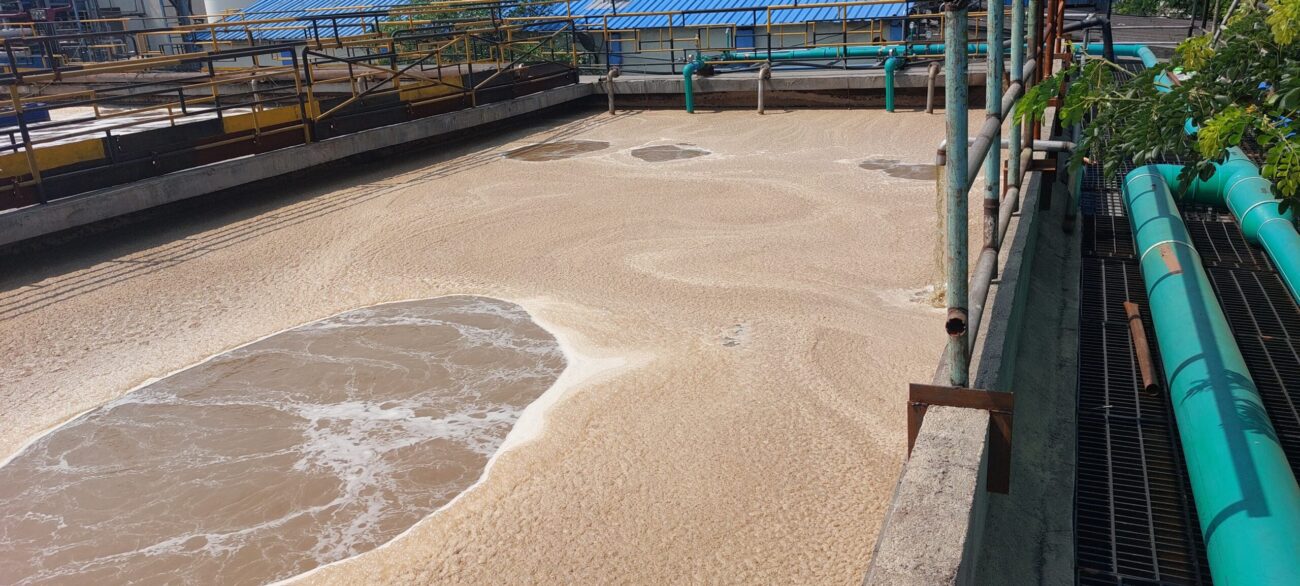
A bottling plant treating 1,000 mg/L COD influent cut post-treatment COD to under 30 mg/L and shut down its blower and three of its four aerators.
Pharmaceutical manufacturing
Hyderabad, India
A pharmaceutical plant raised throughput from 250 to 300 m³/day while its incoming COD load climbed from 11,000 to 14,000 mg/L — with no change to existing equipment.
LP2LP case studies
Get both case studies
Beverage bottling and pharmaceutical manufacturing installations, with results. Enter your details and download both PDFs straight away.
Currently have a wastewater bottleneck?
See the impact PCI Gases’ LP2LP system could have on your facility using our online calculator.
Example figures shown in the form are for a 12,500 m³/day municipal plant.
Common questions about oxygen enrichment for wastewater
Can I increase treatment capacity without building new tanks?
Yes. The enhanced oxygen availability has the potential to increase plant treatment capacity by up to 50% — an increase in capacity of an existing footprint, without adding tanks or reactors.
How much energy does this save over conventional aeration?
LP2LP delivers a 30-70% reduction in aeration power compared to conventional aeration methods, and an extra 15% reduction in power demand over conventional VSA by eliminating the final compression stage.
What does LP2LP stand for?
Low pressure to low pressure. Oxygen is generated at low pressure by a DOCS unit and delivered at the low pressure the venturi injectors need, which removes the final compression stage altogether.
Page reviewed: September 2026.
In conclusion
Summary
In conclusion, PCI Gases’ LP2LP™ oxygen enrichment process, integrating advanced VSA technology and using high-efficiency venturi injectors, delivers a cost effective and lower energy solution to wastewater treatment. By generating 93% oxygen at low pressure, this system achieves substantial energy reductions and operational cost savings while being able to increase treatment capacity by up to 50%.
The intelligent design allows for precise monitoring and control, ensuring optimized oxygen delivery and enhanced effluent quality. As wastewater treatment facilities seek to meet stringent environmental regulations and efficiency standards, the LP2LP™ system offers a cutting-edge solution that sets a new benchmark in the industry.
Reshape Your Tomorrow
For detailed specifications and implementation strategies, talk to our water and wastewater team.
12201 Magnolia Avenue, Riverside, California 92503, US · +1 951.479.0860 · ox****@******es.com
PCI Gases is an ISO9001 & ISO13485 registered company · “LP2LP” — U.S. Patent Pending